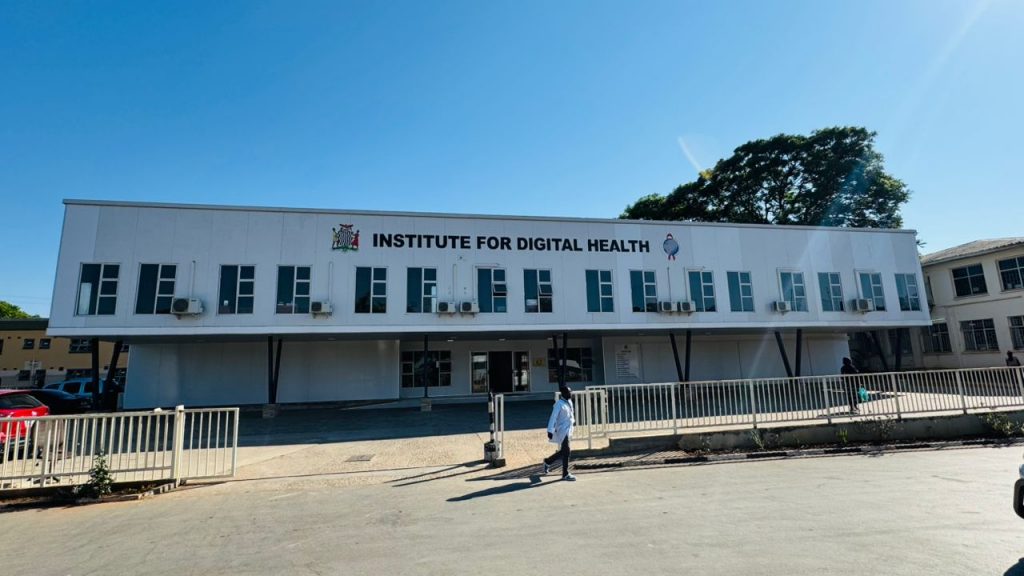
National Multi-pathogen
Diagnostic Program
Background
The National Multi-pathogen Diagnostic Program was launched in July 2024. This is a The Ministry of Health (MoH) led program ran, in collaboration with the Centre for Infectious Disease Research in Zambia (CIDRZ) and with supported by the Centers for Disease Control and Prevention (CDC)., has procured nine open PCR machines to enhance multi-pathogen diagnosis. This initiative is part of the National Multi-pathogen Diagnostic Program (NMPDP), aimed at supporting patient-centered care for respiratory illnesses, sexually transmitted infections (STIs), and diarrheal diseases, among others.
The National Multipathogen Diagnostic Program (NMPDP) will expand diagnostic capacity to support patient-centred care for infectious diseases by establishing molecular diagnostic capabilities for the detection of multiple pathogens in all ten provincial hospitals. These hospitals will be equipped to determine the aetiology of respiratory, STI, diarrheal, and neurological infections. Additionally, microbiology capacities will be strengthened at selected public health facilities, using a hub and spoke model to ensure that all health facilities have access to both molecular and microbiology diagnostics. The program will also focus on building capacities for genomic sequencing and disease surveillance.
| SN | Province | Facility Name |
|---|---|---|
| 1 | Southern | Livingstone Teaching Hospital |
| 2 | Lusaka | University Teaching Hospitals Levy Mwanawasa Hospital |
| 4 | Eastern | Chipata Central Hospital |
| 5 | Central | Kabwe Central Hospital |
| 6 | Copperbelt | Ndola Teaching Hospital |
| 7 | Northwestern | Solwezi General Hospital |
| 8 | Muchinga | Chinsali General Hospital |
| 9 | Northern | Kasama General Hospital |
| 10 | Luapula | Mansa General Hospital |
| 11 | Western | Lewanika General Hospital |
Through these efforts, the Ministry of Health aims to improve patient outcomes by enabling accurate, rapid, and comprehensive pathogen detection, thereby enhancing public health interventions and patient care in Zambia.
Context
Epidemiological data and recent experiences with the COVID-19 pandemic indicate that the next likely pandemic could also be a respiratory illness. Respiratory infections, involving bacterial, fungal, and viral pathogens affecting the upper and/or lower respiratory tract, are major causes of mortality and morbidity across all age groups, particularly in immunocompromised individuals. In 2019, the global incidence of cases was estimated to be 488.9 million for lower and 17.2 billion for upper respiratory tract infections. Despite the progress in HIV epidemic control, with over 1.2 million people on antiretroviral therapy in Zambia, there remains a 20-fold increased risk of respiratory illnesses among people living with HIV (PLWH).
Current diagnostics for respiratory illnesses are limited to TB and other bacterial pathogens, excluding most viral pathogens, which forces clinicians to treat based on symptoms when TB tests are negative. The use of open qPCR assays can enhance diagnostic capabilities by screening for TB resistance to multiple antibiotics and improving the rapid detection of viral pathogens. Comprehensive screening will also aid in managing co-infections, which are common in hospitalized patients with viral respiratory tract infections and contribute to higher ICU admission rates and mortality.
The National Multipathogen Diagnostic Program (NMPDP) also focuses on sexually transmitted infections (STIs) and central nervous system (CNS) infections. STIs such as Chlamydia, Herpes simplex, and Neisseria gonorrhoeae, among others, are prevalent and pose increased risks for HIV transmission. Comprehensive screening for STIs will help inform prevention and control measures. CNS infections, particularly among PLWH and pediatric populations, often present severely and progress rapidly to fatality. Improved diagnostic capabilities through open PCR platforms will enable timely and accurate identification of CNS pathogens, enhancing patient care and public health interventions.
By integrating these advanced diagnostic tools, the NMPDP aims to improve patient outcomes through accurate and comprehensive pathogen detection, ultimately supporting patient-centered care for respiratory illnesses, STIs, and CNS infections in Zambia.
Program Work-Flow
Clinicians will initiate the diagnostic process by identifying patients that require microbiology and/or molecular investigation as part of routine clinical practice. Program case investigation forms will be used to capture patient data in real-time or transcribed into digital records. For notifiable diseases, clinicians will ensure that the case definition is met before samples are collected for laboratory testing. They will ensure that all the required patient information is captured on the approved laboratory requisition forms and entered into the respective hospital information system (paper-based or electronic)
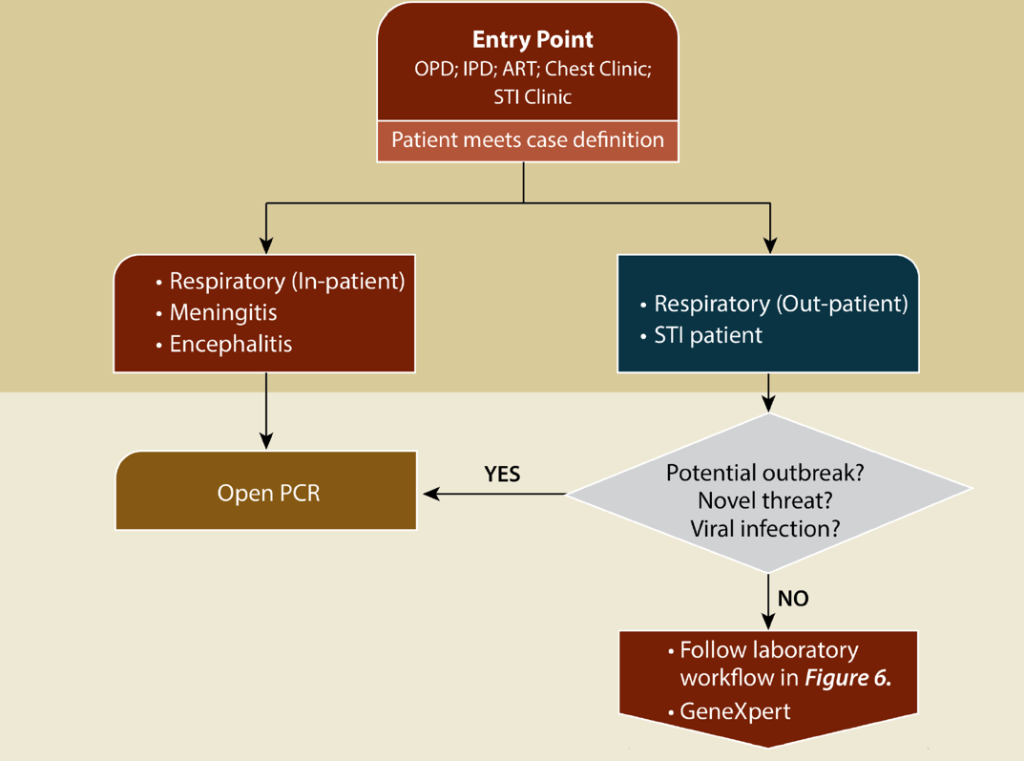
Figure 1. NMPDP workflow
Some Key Achievements
- Collaborative Document Development: Facilitated the development of essential documents like the Program Framework, program protocols, and the National Genomic Strategic Plan, in partnership with various stakeholders.
- Microbiology Supply Distribution: Distribution of microbiology supplies, including Antimicrobial Susceptibility Testing (AST) materials and media preparations.
- PCR Platform Deployment and Support: Overseeing the placement and ongoing support of open PCR platforms in health facilities in UTH, Livingstone, and Chinsali, enhancing diagnostic capabilities.
- Laboratory Assessments: Conducted thorough assessments of microbiology and molecular-biology laboratories to ensure they meet quality and operational standards.
Any graphs, relevant documents, contact details, links to any program websites or any key research done using their surveillance data to come on this section.